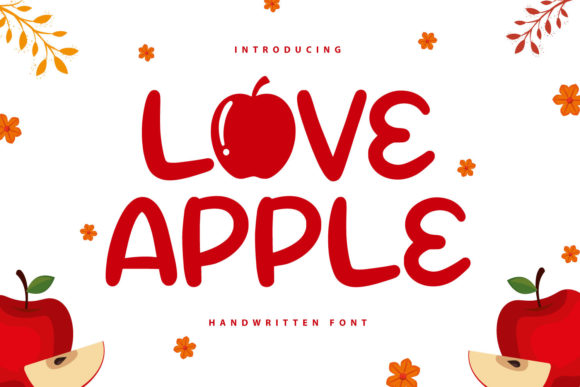
Love Apple Font Evaluation
In the landscape of digital typography, selecting the right typeface is a critical decision that influences the tone, readability, and overall success of a design project. Love Apple has emerged as a distinctive option for creators seeking a display font that combines whimsy with visual appeal. This article provides an objective analysis of the font, examining its characteristics, ideal use cases, and potential limitations to help designers make informed decisions.
Understanding Love Apple: A Display Typeface
Love Apple is classified as a fun and bubbly display font. Unlike text-oriented typefaces designed for long-form reading, this font is engineered for impact at larger sizes. Its name suggests a playful aesthetic, often characterized by rounded terminals, irregular spacing, and a hand-drawn quality that mimics organic forms. The "bubbly" nature of the letterforms creates a sense of movement and lightness, making it stand out in crowded visual environments.
The font's primary function is decorative. It is not intended for body copy or dense paragraphs where legibility over extended reading distances is paramount. Instead, it serves as a visual hook, drawing the eye immediately through its unique contours and energetic personality. When evaluating Love Apple, designers should recognize it as a tool for establishing a specific mood rather than a neutral vehicle for information.
Ideal Applications and Use Cases
Designers often gravitate toward Love Apple when the project requires an immediate emotional connection. The font's versatility allows it to fit into several specific categories where a touch of beauty and playfulness is essential.
- Cartoon-Related Designs: The organic curves of the font align naturally with animated characters and comic book aesthetics. It reinforces the fictional or exaggerated nature of cartoons without feeling forced.
- Children's Games and Media: For educational apps, board games, or children's literature, the approachable shape of the letters reduces intimidation. It signals to young users that the content is safe, engaging, and entertaining.
- Titles and Posters: In marketing materials, headlines need to stop the scroll. Love Apple offers high visibility and distinctiveness, ensuring that posters and promotional banners capture attention in a cluttered marketplace.
- Brand Names and Logos: Companies targeting families, toy manufacturers, or lifestyle brands may find the font suitable for logo creation. It conveys friendliness and creativity, traits often associated with these industries.
- Book Covers and Quotes: For titles that are lighthearted, romantic, or inspirational, the font adds a layer of stylistic flair that standard sans-serifs cannot achieve.
When used correctly, Love Apple transforms a generic layout into a curated experience. It acts as a visual cue that sets expectations for the content that follows, preparing the audience for something creative and non-traditional.
Benefits and Design Advantages
The primary advantage of choosing Love Apple is its ability to convey emotion instantly. Typography is rarely neutral; it carries psychological weight. The bubbly structure of this font evokes feelings of joy, nostalgia, and informality. This makes it highly effective for projects that aim to build rapport with the viewer.
Additionally, the font offers strong visual hierarchy. Because it is a display type, it naturally dominates the page. Designers can use it to create focal points without relying heavily on color or imagery. This can be particularly useful in minimalistic designs where the typography itself must carry the artistic load. The unique character shapes also provide a level of brand differentiation, helping a project avoid looking like a template-based design.
Tradeoffs and Limitations
While Love Apple excels in specific contexts, it comes with significant tradeoffs that must be considered before adoption. The most critical limitation is legibility. The stylized nature of the letters, while charming, can compromise clarity when used at small sizes or in complex backgrounds. If the contrast between the text and the background is low, the intricate details of the font may disappear, rendering the text unreadable.
Another consideration is the duration of exposure. Fonts with high personality can cause "visual fatigue" if used for too long. Reading a paragraph set entirely in Love Apple would likely feel exhausting and distracting. Therefore, it is unsuitable for user interfaces requiring frequent scanning, such as settings menus, news feeds, or instructional manuals. Overuse can also lead to a perception of unprofessionalism in serious contexts. Using a bubbly font for financial reports, legal documents, or medical advice would undermine the authority and trustworthiness of the message.
Situations Requiring Alternatives
There are scenarios where Love Apple is a poor fit, and exploring alternatives is necessary. If the goal is to communicate efficiency, precision, or corporate stability, a geometric sans-serif or a classic serif typeface would be more appropriate. For instance, a technology startup focusing on cybersecurity might choose a clean, modern font to signal security and reliability, whereas Love Apple might suggest a lack of seriousness.
Furthermore, if the target audience includes international readers who may struggle with non-standard letterforms, a more conventional typeface ensures better cross-cultural communication. Accessibility is another factor; screen readers and assistive technologies sometimes struggle with highly decorative fonts, potentially excluding users with visual impairments. In these cases, prioritizing accessibility over style is the responsible choice.
Practical Decision-Making Insights
To determine whether Love Apple aligns with your goals, consider the following decision framework:
- Define the Tone: Does your project require a playful, warm, or nostalgic atmosphere? If yes, this font is a strong candidate. If the tone needs to be serious, urgent, or authoritative, look elsewhere.
- Analyze the Hierarchy: Plan to use Love Apple only for headlines, logos, or short phrases. Pair it with a highly legible body font, such as a simple sans-serif, to balance the design. Never use it for large blocks of text.
- Test for Legibility: Before finalizing the design, test the font at the smallest size you intend to use. Ensure that the details do not blur or become indistinguishable from the background.
- Consider the Context: Where will the design appear? On a mobile screen with limited space, a complex display font may degrade the user experience. On a large-format poster, it will shine.
Evaluating Love Apple requires a balance between aesthetic desire and functional necessity. It is a powerful tool for adding character to a design, but it demands discipline in its application. By understanding its strengths and respecting its limitations, designers can leverage the font to create work that is both visually striking and effectively communicative.
Ultimately, the choice depends on the specific narrative of the project. If the story is one of fun, creativity, and warmth, Love Apple offers a compelling solution. However, if the priority is clarity and neutrality, a more subdued typeface remains the superior choice. Careful evaluation ensures that the typography supports the message rather than overshadowing it.