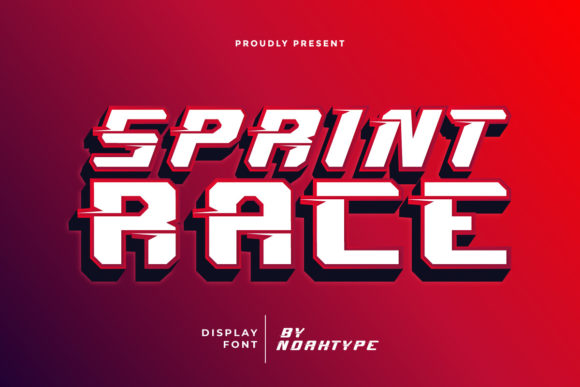
Evaluating Sprint Race Font for High-Impact Design Projects
In the landscape of digital and print typography, selecting the right typeface is rarely just about readability; it is about conveying motion, energy, and immediate attention. For designers working in sectors that demand a visceral reaction—such as esports, automotive advertising, or futuristic tech branding—the visual weight and directional flow of letters matter immensely. This is where Sprint Race enters the conversation. It is not merely a font; it is a display typeface engineered to simulate speed and impact, offering a distinct aesthetic that can elevate a project from static to dynamic.
When evaluating display fonts, professionals often look for characters that possess "strong characters racing across the screen." This specific phrasing captures the essence of Sprint Race: a design philosophy rooted in kinetic energy. Unlike traditional serif or sans-serif fonts that prioritize neutrality and legibility above all else, Sprint Race prioritizes expression. It is built for headlines, logos, posters, and titles where the text itself becomes a graphical element. Understanding its unique style helps designers determine whether it fits their specific creative vision or if a more subdued approach is warranted.
The Visual Identity of Sprint Race
At its core, Sprint Race is a display font characterized by its aggressive slant and sharp geometric forms. The letters are designed with an inherent forward momentum, creating a sense of velocity even when viewed in isolation. This is achieved through elongated terminals, tapered edges, and a consistent horizontal bias that guides the eye from left to right with urgency. The result is a typographic presence that feels modern, technological, and inherently active.
The font’s versatility lies in its ability to adapt to various themes while maintaining its signature character. Whether applied to a logo for a gaming tournament, a title card for a sci-fi film, or a poster for a sports event, Sprint Race brings a special effect to any design you have in mind. Its strong visual identity ensures that it commands attention, making it an excellent choice for projects that need to stand out in a crowded visual field. However, this strength also dictates its limitations, which we will explore later in the context of broader design systems.
Comparing Sprint Race to Standard Display Options
To understand the value proposition of Sprint Race, it is helpful to compare it against other common categories of display fonts. Most display typefaces fall into one of three buckets: decorative novelty, bold geometric sans-serifs, or condensed athletic styles. Sprint Race occupies a niche that blends elements of all three but distinguishes itself through its specific emphasis on motion.
- Decorative Novelty Fonts: These fonts often rely on gimmicks or highly specific thematic elements (e.g., horror, vintage, or hand-drawn styles). While they offer strong personality, they can feel dated or overly literal. Sprint Race avoids this trap by using a clean, modern aesthetic that feels timeless within the context of technology and sports.
- Bold Geometric Sans-Serifs: Fonts like Futura or Gotham provide structure and clarity but lack inherent movement. They are stable and reliable but do not evoke the same adrenaline rush. Sprint Race offers the structural integrity of a geometric font but adds a layer of kinetic flair that makes it more suitable for high-energy contexts.
- Condensed Athletic Styles: Many sports-related fonts use heavy condensation to fit large words into small spaces. While effective, these can sometimes appear cramped or generic. Sprint Race maintains a wider x-height and more open counters, ensuring that despite its slanted appearance, the letters remain distinct and readable at various sizes.
This comparison highlights that Sprint Race is not a replacement for standard body text or neutral headers. Instead, it serves as a specialized tool for moments when the design needs to communicate speed, precision, and modernity simultaneously. It bridges the gap between pure abstraction and functional typography, offering a balance that appeals to both artistic sensibilities and marketing objectives.
Best-Fit Situations and Practical Applications
Determining when to use Sprint Race requires an understanding of its intended environment. It shines brightest in contexts where the audience expects excitement and innovation. Below are several scenarios where this font proves particularly effective.
Gaming and Esports
In the gaming industry, visual aggression and futuristic aesthetics are standard. Sprint Race aligns perfectly with UI elements, scoreboards, and promotional banners for competitive games. Its sharp angles mirror the precision required in gameplay, while its racing motif resonates with fans of fast-paced action. When used for game titles or patch notes, it reinforces the brand’s identity as cutting-edge and competitive.
Technology and Space Exploration
For startups in the tech sector, particularly those involved in AI, robotics, or space exploration, communication must feel advanced and forward-thinking. Sprint Race’s sleek lines and modern vibe make it an ideal candidate for website headers, product launch videos, and conference slides. The font subtly evokes imagery of spaceships and data streams, enhancing the narrative of progress and discovery without relying on cliché iconography.
Sports and Automotive Marketing
The connection between Sprint Race and motorsports is intuitive. Logos for car brands, race teams, or fitness challenges benefit from the font’s inherent speed. Posters and social media graphics featuring athlete quotes or event announcements gain a dynamic edge when set in this typeface. The strong characters seem to leap off the page, encouraging viewers to engage with the content more actively.
Tradeoffs and Limitations
No single typeface is universally applicable, and Sprint Race is no exception. Its very strengths introduce specific constraints that designers must navigate. Recognizing these tradeoffs is crucial for avoiding misapplication and ensuring professional results.
Readability at Small Sizes: Due to its stylized nature, Sprint Race is not suited for body copy or long-form text. The slanted forms and sharp details can become difficult to parse when scaled down or used in dense paragraphs. It should be reserved for headlines, subheads, and short phrases where impact outweighs the need for prolonged reading.
Tonal Rigidity: The font carries a strong emotional charge—it is loud, confident, and energetic. This makes it less appropriate for projects requiring subtlety, elegance, or calmness. A luxury brand seeking to convey heritage and quiet sophistication might find Sprint Race too aggressive. Similarly, healthcare or financial institutions aiming for trust and stability may prefer more grounded typefaces.
Pairing Challenges: Because Sprint Race is so visually dominant, it requires careful pairing with complementary fonts. Neutral sans-serifs or simple serifs work best to balance its intensity. Using another display font alongside it can create visual clutter and compete for the viewer’s attention. Successful designs often use Sprint Race as the hero element, allowing supporting text to recede into the background.
Decision Factors for Designers
When deciding whether to incorporate Sprint Race into a project, consider the following factors to ensure alignment with your goals.
- Brand Personality: Does your brand value speed, innovation, and boldness? If yes, Sprint Race is a strong candidate. If your brand leans toward tradition, warmth, or minimalism, look elsewhere.
- Medium of Delivery: Is the design primarily digital, printed on large format, or animated? Sprint Race performs exceptionally well in digital interfaces and large-scale prints where its details can be appreciated. In low-resolution environments, some of its finer points may be lost.
- Target Audience: Who are you trying to reach? Younger demographics and enthusiasts of tech, gaming, or sports are likely to respond positively to the font’s modern aesthetic. Older audiences or those in conservative industries may perceive it as distracting or unprofessional.
- Content Hierarchy: Will the font be used sparingly for impact, or does it dominate the layout? Sprint Race works best when used strategically to highlight key messages rather than filling every available space.
By weighing these considerations, designers can make informed decisions that enhance rather than hinder their creative output. Sprint Race is a powerful tool in the typographic arsenal, capable of bringing projects to the highest level when used with intention. It invites designers to think beyond conventional layouts and embrace the energy of motion.
Conclusion on Utility and Style
Sprint Race stands out as a distinctive option in the realm of display typography. Its unique style, defined by strong characters racing across the screen, offers a special effect that few other fonts can replicate. Whether you are designing for games, technology, sports, or spaceships, this font provides a versatile foundation for modern ideas. It allows creators to inject vitality and direction into their work, transforming static text into a compelling visual statement.
However, its effectiveness depends on thoughtful application. By understanding its strengths, acknowledging its limitations, and comparing it against alternative approaches, designers can leverage Sprint Race to achieve maximum impact. It is not a one-size-fits-all solution, but for the right project, it can indeed bring your designs to a new level of engagement and memorability. Fall in love with its potential, but always let the context guide your choice.