Evaluating Haters: A Practical Guide to Using This Playful Display Font
In the vast landscape of digital typography, selecting the right typeface often feels like navigating a maze of conflicting styles and technical constraints. Designers frequently encounter a specific niche where standard sans-serifs feel too sterile and traditional serifs appear too formal. This is where display fonts with distinct personalities become essential tools. Among these specialized options, Haters has emerged as a notable choice for projects requiring immediate visual impact and a sense of approachable whimsy. Understanding what this font offers, how it behaves in layout, and when it serves your design goals best requires looking beyond its playful name.
Understanding the Visual Identity of Haters
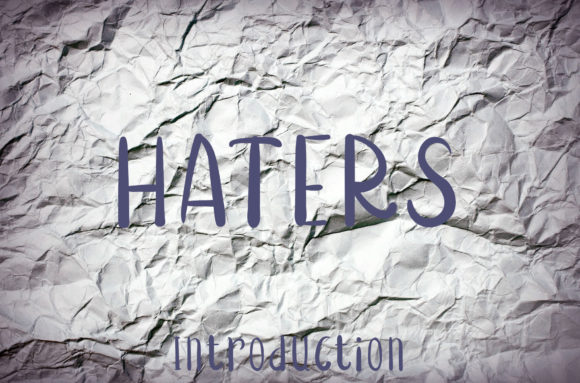
At first glance, Haters presents itself as a thick-lettered display font characterized by rounded, friendly forms. The term "display" in typography refers to typefaces designed for large sizes rather than body text. These fonts prioritize aesthetic appeal and character over readability at small scales. Haters fits squarely into this category, utilizing bold weights and generous proportions to command attention.
The distinctiveness of Haters lies in its balance between thickness and friendliness. Many bold display fonts can appear aggressive or heavy-handed, but Haters mitigates this through soft curves and open apertures (the spaces inside letters like 'e' or 'a'). This creates a visual tone that is inviting rather than imposing. For designers working on brands that want to project confidence without seriousness, this specific combination of traits is valuable.
- Thick Letterforms: The substantial stroke weight ensures visibility even from a distance or on low-resolution screens.
- Rounded Geometry: Soft edges reduce visual tension, making the text feel accessible.
- Consistent Weight: Unlike variable fonts that shift dynamically, Haters maintains a uniform presence across its character set, providing stability in design compositions.
Comparing Haters to Standard Display Options
When evaluating Haters against other display fonts, it is helpful to consider the broader categories of typographic personality. Most display fonts fall into three general buckets: geometric, humanist, and decorative. Haters occupies a unique space within the humanist-decorative hybrid zone.
Consider a typical geometric sans-serif used for headlines. These fonts rely on mathematical precision, sharp angles, and uniformity. While they convey modernity and efficiency, they can sometimes lack warmth. In contrast, Haters introduces organic irregularities and playful quirks that geometric fonts avoid. This makes Haters more suitable for creative industries, lifestyle brands, or educational materials where human connection is prioritized over corporate rigidity.
Conversely, compared to highly decorative novelty fonts, Haters remains relatively restrained. Some display fonts push so far into caricature that they become difficult to read or visually exhausting after prolonged exposure. Haters avoids this pitfall by maintaining legibility despite its stylization. It does not sacrifice function entirely for form, which is a critical distinction for professional designers who need their work to communicate clearly while still standing out.
Best-Fit Use Cases and Applications
Determining whether Haters is the right tool for a project depends heavily on context. Because it is a display font, it is not intended for long-form reading. Its strength lies in short bursts of text where visual hierarchy is paramount. Below are scenarios where Haters typically performs well.
- Event Posters and Flyers: The bold nature of the font ensures that event titles and dates pop against busy backgrounds. Its playful tone suits festivals, workshops, and community gatherings.
- Social Media Graphics: On platforms dominated by scrolling content, thick letterforms grab attention quickly. Haters works effectively for Instagram quotes, promotional banners, and story overlays.
- Product Packaging: For consumer goods targeting younger demographics or seeking a fun brand identity, Haters adds shelf appeal. Its friendly characters suggest approachability and quality.
- Headlines in Digital Ads: Pay-per-click advertisements benefit from high-contrast typography. Haters provides the necessary visual weight to compete with surrounding elements.
In each of these cases, the font acts as a focal point. It draws the eye immediately, allowing secondary information to support the main message without competing for attention. This hierarchical clarity is one of the primary reasons designers choose display fonts like Haters over standard UI typefaces.
Tradeoffs and Limitations to Consider
No single typeface is universally applicable, and Haters is no exception. Recognizing its limitations is crucial for making an informed decision. The most significant constraint is its size dependency. As mentioned, Haters is designed for display purposes. Attempting to use it for paragraphs of body text will result in poor readability and visual fatigue. The thick strokes crowd together, making it difficult for the eye to track lines smoothly.
Another consideration is tonal appropriateness. Because Haters is inherently playful and cute, it may clash with brands that require authority, solemnity, or luxury positioning. High-end fashion houses, legal firms, or financial institutions often seek typefaces that convey stability and tradition. Haters’ whimsical nature might undermine such messages, creating a dissonance between the visual style and the brand’s core values.
Additionally, versatility varies depending on the rest of the design system. If a layout already contains multiple competing display fonts, adding Haters could create chaos. It works best when paired with neutral, simple typefaces that allow it to shine. Pairing Haters with another complex or equally bold font often results in a cluttered composition that lacks focus.
Decision Factors: When to Choose Haters
Selecting Haters should be driven by specific project requirements rather than trend-following. Here are practical factors to evaluate before incorporating it into your workflow.
Brand Personality Alignment: Does your project aim to be fun, energetic, and approachable? If yes, Haters aligns well. If the goal is minimalism, sophistication, or seriousness, look elsewhere.
Scale of Usage: Will the font be used primarily for headlines, logos, or large-format prints? If the answer is yes, Haters is a strong candidate. If you need a font that transitions seamlessly from headers to footnotes, a versatile sans-serif or serif would be more efficient.
Target Audience Demographics: Younger audiences or those engaging with creative content often respond positively to expressive typography. Older demographics or professional sectors may prefer cleaner, more conventional options. Understanding who will view the design helps determine if Haters’ charm resonates with them.
Design Complexity: Is the overall design simple enough to let the font speak? Haters carries a lot of visual weight. It thrives in uncluttered layouts where it can be the star. If the design is already dense with images, icons, and patterns, a subtler font might prevent visual overload.
Integrating Haters into Creative Workflows
For designers ready to experiment with Haters, integration requires thoughtful placement. Start by using it sparingly. Let it anchor key elements like titles or call-to-action buttons. Avoid using it for navigation menus or subheadings unless brevity is guaranteed. Consistency in sizing also matters; mixing different weights of Haters can sometimes look disjointed if not handled carefully.
Pairing strategies are equally important. Since Haters is distinctive, pair it with clean, understated fonts for supporting text. Neutral sans-serifs or classic serifs provide a calming counterbalance to Haters’ energy. This contrast enhances both typefaces, ensuring the design feels balanced rather than overwhelming.
Testing is another vital step. Always preview Haters in its intended environment. A font that looks great on a desktop monitor may render differently on mobile devices or printed materials. Check for legibility issues, especially at smaller sizes or on lower-quality displays. Adjust spacing and kerning manually if the default settings do not suit your specific layout needs.
Final Thoughts on Versatility and Impact
Haters stands out as a specialized tool in the designer’s arsenal. It is not a jack-of-all-trades but excels in roles requiring bold, friendly, and eye-catching communication. By understanding its strengths in display contexts and respecting its limitations regarding body text and serious tones, designers can leverage Haters to enhance their creative ideas effectively.
Ultimately, the value of any font lies in its ability to serve the message. Haters brings a unique flavor to designs that need a touch of playfulness and presence. When used intentionally and in the right context, it transforms static layouts into engaging visual experiences. For those exploring alternatives, comparing Haters against other display options based on these criteria will help identify the best fit for each unique project.