Beast of Guilt: A Strategic Approach to Using Elegant Display Typography
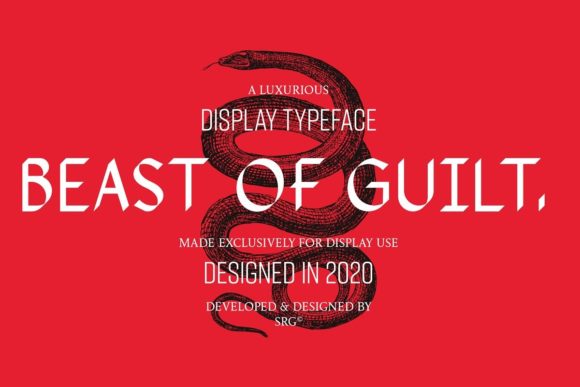
In the landscape of visual communication, typography is rarely just about readability; it is a primary vehicle for tone, authority, and emotional resonance. For professionals, entrepreneurs, and creators seeking to elevate their brand identity or project aesthetic, selecting the right typeface is a critical decision that impacts long-term recognition and user perception. Among the tools available, Beast of Guilt stands out not merely as a decorative element, but as a sophisticated instrument for high-impact design. This elegant and classic styled display font offers a unique combination of historical gravitas and modern accessibility, making it a strategic asset for those who value precision in their visual output.
The core appeal of Beast of Guilt lies in its PUA (Private Use Area) encoding. While this technical specification might sound obscure to the non-designer, it represents a significant advantage for practitioners who demand control over their creative assets. PUA encoding allows designers to access all glyphs and swashes with ease, bypassing the limitations often found in standard character sets. This means that every ornamental detail, every flourish, and every stylistic variation is readily available within the same file structure. When you add Beast of Guilt confidently to your projects, you are not just inserting text; you are deploying a complete system of visual expression that supports nuanced communication.
The Strategic Value of Classic Elegance in Modern Branding
Why choose a "classic styled" font in an era dominated by minimalist sans-serifs and bold geometric displays? The answer lies in the psychology of trust and heritage. In marketing and branding, elegance often signals quality, stability, and attention to detail. Beast of Guilt taps into these associations without feeling archaic. Its design language suggests a refined taste that can differentiate a brand from competitors who rely on more generic typographic choices.
For small business owners and freelancers, establishing credibility quickly is essential. A well-chosen display font like Beast of Guilt can serve as a silent ambassador for your brand’s values. It communicates that you care about the finer points of presentation. Whether you are designing a logo for a luxury boutique, a header for a high-end blog, or the title page of a professional report, the presence of such a distinctive typeface can elevate the perceived value of the content. It creates a visual hierarchy that draws the eye and commands respect, supporting goals related to positioning and customer experience.
Moreover, the versatility of Beast of Guilt allows it to bridge the gap between traditional aesthetics and contemporary layouts. It does not need to dominate every aspect of a design. Instead, it can be used strategically to anchor key messages. By using it sparingly and intentionally, you create moments of visual pause that encourage the audience to engage more deeply with the material. This approach aligns with best practices in user experience design, where clarity and beauty coexist to reduce cognitive load and enhance memorability.
Leveraging PUA Encoding for Creative Control
The technical architecture of Beast of Guilt directly influences how efficiently you can work. Because the font is PUA encoded, accessing specific glyphs and swashes becomes a seamless part of the design workflow. In practical terms, this means you do not need to hunt through multiple files or use complex workarounds to find the perfect decorative element. You have immediate access to the full range of the font’s capabilities.
- Efficiency in Production: For marketers and publishers working under tight deadlines, the ability to quickly insert ornate swashes or alternative letterforms saves valuable time. This efficiency translates to better productivity, allowing you to focus more on strategy and less on technical hurdles.
- Customization Without Compromise: Standard fonts often limit you to basic variations (bold, italic). Beast of Guilt’s encoding allows for extensive customization. You can mix standard characters with decorative elements to create unique headlines or logos that are distinct to your brand. This level of customization supports creativity and helps in achieving unique long-term results.
- Consistency Across Media: Because all glyphs are contained within a single encoded framework, maintaining consistency across different media—from digital screens to printed materials—is easier. This ensures that your brand identity remains cohesive, which is crucial for building trust and recognition among your audience.
When you understand the mechanics behind the font, you can make more informed decisions about its application. It transforms the font from a passive tool into an active component of your design strategy. You are no longer limited by what the font *can* do, but rather focused on what it *should* do to support your specific communication goals.
Intentional Application: Planning and Positioning
Using a striking display font requires a thoughtful approach. Random application can lead to visual clutter and dilute the message. To achieve better results, consider the context in which Beast of Guilt will appear. Is it serving as a primary headline? A subheading? A decorative accent? Each role requires a different level of prominence and interaction with other design elements.
Start with clear objectives. Before opening your design software, define what you want the typography to communicate. Do you want to evoke nostalgia? Authority? Luxury? Once you have identified the desired emotional response, you can determine how much of Beast of Guilt to use. For instance, if the goal is to convey understated elegance, using the font for a single, impactful word might be more effective than filling a page with text. Conversely, if the aim is to create a bold statement, utilizing the larger swashes and alternate characters can add weight and presence.
Consider the pairing. Beast of Guilt has a strong personality, so it needs a complementary partner to balance its visual weight. Simple, clean sans-serif or serif body fonts often work best to provide contrast. This juxtaposition allows the display font to shine without overwhelming the reader. In educational or instructional contexts, this balance is particularly important. The body text must remain highly readable, while the headings can carry the stylistic burden. This separation of concerns enhances learning and information retention, supporting the overall effectiveness of your content.
Decision-Making Guidelines for Designers
- Assess the Audience: Does your target demographic appreciate classic design cues? If your audience skews towards modern tech enthusiasts, a heavy classical font might feel out of place unless used ironically or as a deliberate contrast.
- Define the Hierarchy: Ensure that Beast of Guilt is reserved for elements that need to stand out. Overusing it diminishes its impact and can make the design look chaotic.
- Test for Legibility: Even display fonts must be legible at various sizes. Test your designs in black and white to ensure that the shapes of the letters and swashes hold up without the distraction of color or texture.
- Align with Brand Voice: Does the elegance of the font match the voice of your brand? If your brand is playful and informal, Beast of Guilt might send mixed signals unless carefully curated.
Risks and Mitigation Strategies
No design choice is without risk. The primary danger of using a font like Beast of Guilt is misalignment with intent. If used incorrectly, it can appear pretentious, dated, or simply distracting. To mitigate these risks, always ground your design decisions in the needs of the user. Ask yourself: Does this typographic choice help the user understand the message faster, or does it hinder them?
Another consideration is technical compatibility. While PUA encoding offers great flexibility, it is important to ensure that the final output formats (such as PDFs or web embeddings) preserve the integrity of the special characters. Always test your designs across different devices and platforms to confirm that the glyphs render correctly. This diligence protects your investment in the font and ensures a consistent customer experience.
Furthermore, avoid relying on the font to carry the entire weight of your message. Typography should enhance the content, not replace it. Clear copywriting and solid strategic planning are still required. Beast of Guilt is a powerful amplifier, but it cannot fix weak ideas or poor organization. Use it to polish and present your best work, not to mask deficiencies.
Long-Term Value and Professional Growth
Investing time in mastering tools like Beast of Guilt contributes to professional growth. As you become more adept at using advanced typographic features, your design skills expand, offering new avenues for creative expression. This continuous learning supports adaptability in a rapidly changing market. Professionals who can leverage sophisticated design tools to solve communication problems are more valuable to their teams and clients.
Additionally, having a library of high-quality, well-encoded fonts provides a competitive edge. When you can confidently say that you have access to unique, customizable typefaces, you offer more value to your projects. This capability supports long-term results by enabling you to create distinctive brand identities that stand the test of time. In a crowded marketplace, distinction is currency. Beast of Guilt, with its elegant and classic style, provides a reliable means of achieving that distinction.
Ultimately, the decision to use Beast of Guilt should be driven by a desire for excellence. It is not just about making things look good; it is about making them work better. By integrating this font into your workflow with intention and strategy, you elevate the quality of your output. You demonstrate a commitment to craft that resonates with audiences. Whether you are a seasoned designer or a business owner managing your own branding, understanding the potential of this tool allows you to make smarter decisions. Add it confidently to your projects, and you will love the results—not just because they look beautiful, but because they effectively communicate your vision.